Reuse Word content and original images in teaching materials
Keep source illustrations, distinguish resources from copies and check assets after export.
WordPilot · Updated
- Best for
- Science · 7–10
- You provide
- A few minutes to follow the method
- You get
- A practical method with an example to review
Upload the original DOCX
Use a .docx file, not a legacy .doc file. Wait for processing and read any warnings. The source is a project resource; uploading it does not automatically create an editable document. Ask for an editable copy when you want to change the document itself.
State what must stay
For the plant lesson, ask to reuse the original plant illustration and preserve the scientific explanation. Explicitly say not to generate a replacement image. School logos and photographs should be reused only when you have permission. Ask for clarification if a required asset is missing.
Inspect the delivered file
Compare source and result. Confirm that the expected illustration appears, text has not disappeared and the header remains readable. PDF is the fixed-layout option; Word can reflow. Open the downloaded file separately to check the assets, not just the in-app preview.
What the finished resource can look like
A short lesson plan with an original plant illustration, observation routine and exit question.
- Subject
- Science
- Suggested age
- 7–10
- Sequence seed, seedling and mature plant
- Separate observation from prediction
Original WordPilot example, reusable and adaptable for classroom use. No official curriculum alignment claimed. Review and adapt for your learners.
Open and adapt the resource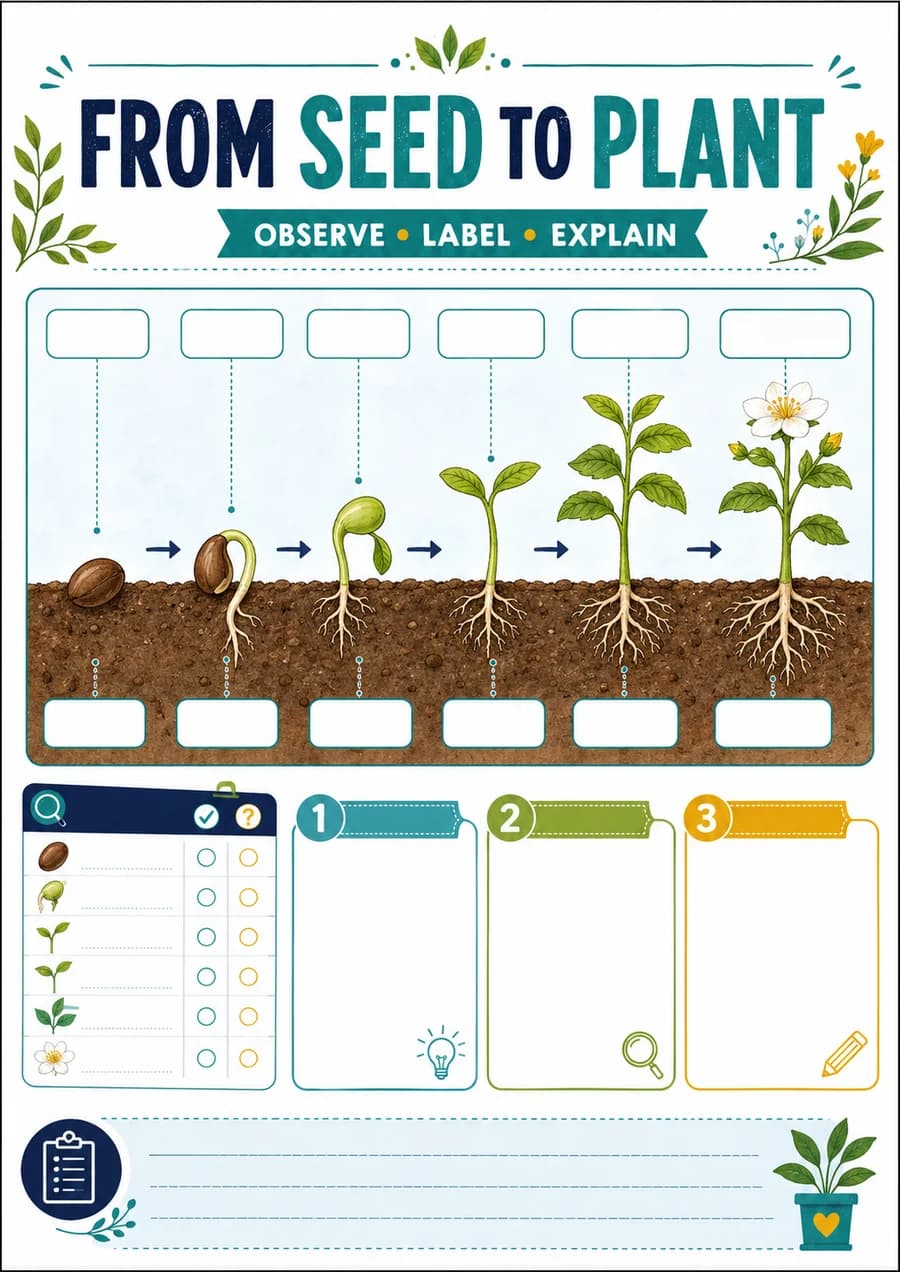
Answer key / marking guidance
- A root or shoot emerging is observable evidence. A prediction describes what we expect, not what we have seen.
View the example material screenshot
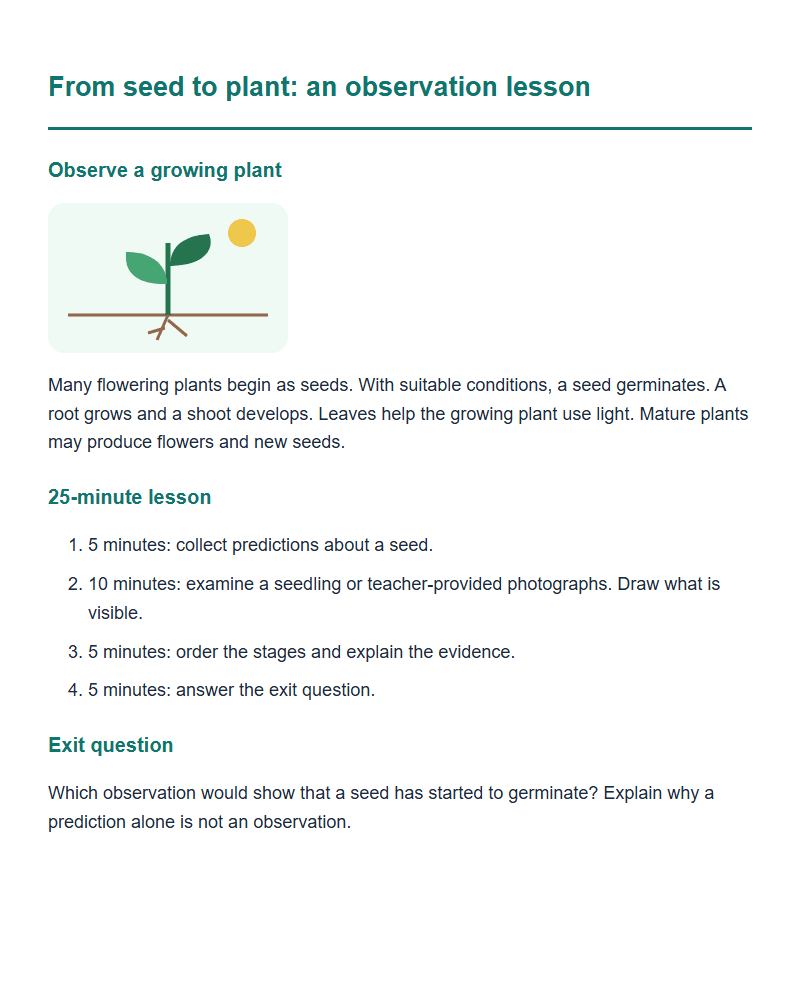
Screenshot of the example content, not the application interface.